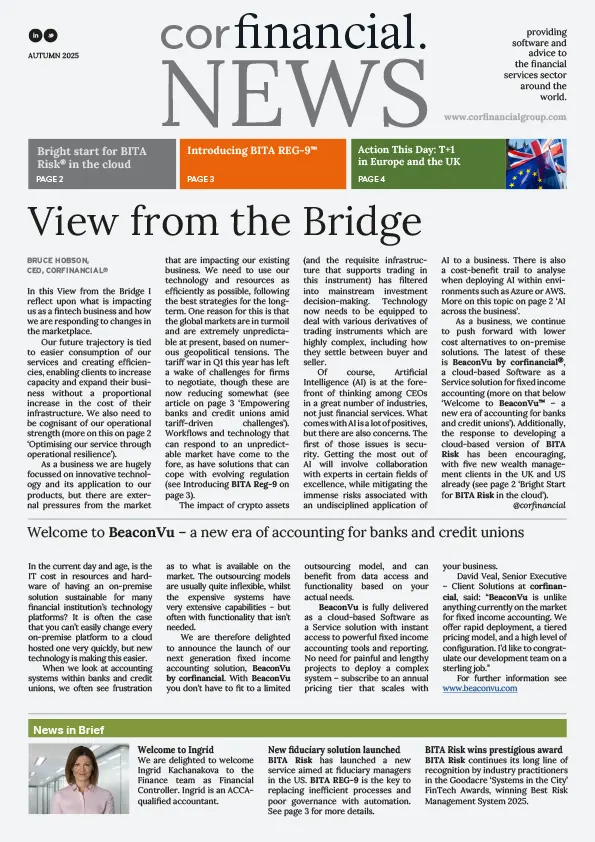
A finger on the pulse of T+1 in the EU & UK

T+1 in the EU & UK

The practical challenges facing financial institutions and indicators of their preparedness for the deadline.

A recent ValueExchange webinar, hosted in partnership with Clearstream and Euroclear, provided some valuable insights into the industry’s transition to T+1 settlement across the UK and EU. Drawing on a survey of 350 financial professionals, the panel explored the practical challenges firms face and argued that the shift should be treated as an opportunity to improve efficiency rather than a narrow compliance exercise.

The panel brought together Kathy Waldie, Head of Target Services Governance and T+1 Programme Lead at Clearstream; Gareth Jones, Head of Settlement and Cash Product Management at Euroclear, who oversees T+1 across the organisation; and Emma Johnson, Head of Industry Advocacy and Insight at ValueExchange, the group’s resident T+1 authority.

The discussion opened with a look at how prepared the market actually is. A live poll showed that half of attendees remain in the planning phase, with a smaller proportion further along in building or testing their systems. The panellists were candid in saying they had hoped to see more firms move past planning by this stage, particularly with deadlines arriving before the end of the current year, well ahead of the headline October 2027 date. They noted that the core infrastructure of the market, including custodians and dealers, along with the more established geographies, tend to be further along than the rest of the industry.

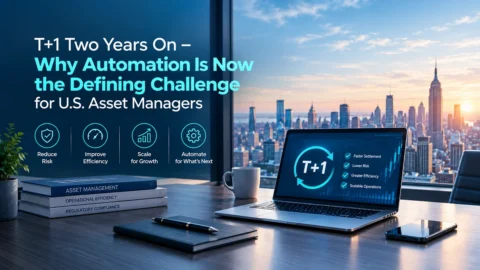
T+1 Two Years On: Why Automation Is Now the Defining Challenge for U.S. Asset Managers

T+1-Two-Years-On-Why-Automation-Is-Now-the-Defining-Challenge-for-US-Asset Managers

Two years after the U.S. securities industry successfully transitioned to T+1 settlement, the market can confidently regard the initiative as a success. When the move from T+2 to T+1 settlement was announced, many industry participants anticipated significant disruption. Concerns ranged from compressed operational timelines and increased settlement risk to heightened pressure on middle- and back-office teams. Yet, despite these challenges, the industry achieved one of the most significant post-trade transformations in recent decades with remarkably few disruptions.

The successful implementation of T+1 demonstrated the resilience, collaboration, and adaptability of the U.S. capital markets ecosystem. Asset managers, custodians, broker-dealers, fund administrators, and technology providers worked together to redesign processes, improve communication, and accelerate trade workflows.

However, now that the industry has had two years to operate in a T+1 environment, a new reality is emerging. The transition itself may be complete, but the operational pressures created by shorter settlement cycles remain. For many firms, particularly small and mid-sized asset managers, the focus has shifted from managing T+1 to sustaining it efficiently. Increasingly, automation is becoming not simply an advantage but a necessity.

The Initial Impact of T+1

The move to T+1 fundamentally changed the post-trade operating model. Under T+2, firms had an additional day to resolve discrepancies, affirm trades, manage allocations, and address exceptions. The reduction of the settlement window by 50% compressed these activities into a significantly shorter timeframe.

For asset managers, the impact was immediate.

Trade allocations needed to be completed earlier. Matching and affirmation processes had to occur more quickly. Operational teams faced tighter deadlines to identify and resolve exceptions before settlement. Any delays or manual bottlenecks that had previously been manageable under T+2 suddenly became material risks.

Many firms responded by extending operating hours, increasing staffing support during the transition period, and conducting extensive readiness programmes. Operations teams worked closely with custodians and counterparties to establish new workflows and service level expectations.

The industry’s success was largely driven by preparation. Firms invested heavily in process reviews, workflow redesign, and targeted technology improvements to ensure settlement readiness from day one.

What Firms Learned

Two years on, the lessons from T+1 are becoming clearer.

The first lesson is that operational efficiency is no longer optional. Under T+1, there is little room for manual intervention. Every exception requires faster resolution, every workflow must move more quickly, and every delay carries greater risk.

The second lesson is that visibility across the trade lifecycle is critical. Firms that invested in real-time monitoring and exception management capabilities were better positioned to identify issues before they impacted settlement outcomes.

The third lesson is perhaps the most important: firms that automated key processes adapted more effectively than those that relied on manual workflows.

While many larger asset managers entered the transition with mature operating models and significant technology investments, smaller firms often relied on spreadsheets, email-driven processes, and fragmented systems. These approaches may have been sufficient under T+2, but they are increasingly difficult to sustain in a T+1 environment.

The Growing Challenge for Smaller Asset Managers

Large global asset managers have generally absorbed the operational demands of T+1 through investments in technology, data management, and workflow automation. Smaller firms, however, face a different challenge.

Many boutique asset managers and emerging investment firms operate with lean teams and limited technology budgets. Operational teams are often expected to manage growing volumes of activity without corresponding increases in headcount.

In this environment, manual processes create both operational and strategic risks.

Operational teams spend valuable time chasing trade confirmations, reconciling data across multiple systems, managing exceptions manually, and responding to settlement issues. As transaction volumes increase, these inefficiencies become more pronounced.

Furthermore, regulatory expectations continue to rise. Investors increasingly expect operational excellence, transparency, and resilience from their asset managers regardless of firm size.

The result is a growing gap between firms that have embraced automation and those that continue to depend on manual processes.

Automation Has Become the Next Phase of the T+1 Journey

The industry’s successful migration to T+1 should not be viewed as the end of a transformation programme. Rather, it represents the beginning of a broader shift towards highly automated post-trade operations.

Automation addresses many of the challenges exposed by T+1.

Automated trade processing reduces operational touchpoints and minimizes the risk of human error. Automated exception management allows firms to identify and prioritize issues before they become settlement failures. Automated reconciliations improve data quality while reducing the burden on operations teams.

Perhaps most importantly, automation enables scalability. As firms grow, automated processes can handle increased volumes without requiring proportional increases in operational resources.

This scalability is becoming increasingly important as firms seek to remain competitive in an environment characterized by margin pressure, regulatory complexity, and growing investor expectations.

Why the Case for Automation Is Stronger Than Ever

Two years of operating under T+1 have provided firms with a clear understanding of where inefficiencies exist.

Many organizations that initially managed the transition through additional staffing or temporary workarounds are now recognising that these approaches are not sustainable over the long term.

Labour-intensive processes increase operational costs and expose firms to key-person dependencies. Recruiting experienced operations professionals remains challenging, while increasing headcount does not necessarily solve underlying workflow inefficiencies.

Automation offers a more sustainable solution.

By reducing manual intervention, firms can improve settlement performance, lower operational risk, and redeploy staff towards higher-value activities such as oversight, analytics, and client service.

In an increasingly competitive market, these benefits are becoming strategic differentiators rather than simply operational improvements.

The Role of Salerio®

For smaller and mid-sized asset managers, one of the key barriers to automation has historically been complexity. Traditional transformation projects often required significant investment, lengthy implementation timelines, and dedicated internal resources.

This is where specialist automation providers such as corfinancial® are helping to reshape the market with the Salerio exception management based trade matching and settlement solution.

Salerio’s approach focuses on enabling firms to automate critical operational workflows without the cost and disruption typically associated with large-scale technology projects. By streamlining post-trade processes, reducing manual intervention, and improving operational visibility, firms can achieve many of the benefits traditionally associated with larger technology programmes.

Importantly, this allows smaller asset managers to compete on a more level playing field with larger organizations. Automation is no longer the exclusive domain of global institutions with extensive technology budgets. It is increasingly accessible to firms of all sizes.

As the industry continues to evolve, solutions that deliver rapid operational improvements while supporting long-term scalability will become increasingly valuable.

Looking Ahead

The transition to T+1 will ultimately be remembered as more than a settlement cycle change. It exposed inefficiencies that had existed within post-trade operating models for years and accelerated the industry’s move towards automation.

Two years on, the firms that have thrived are not necessarily those with the largest operations teams. They are the firms that embraced more efficient workflows, improved visibility, and invested in automation.

For smaller asset managers, the message is particularly clear. The question is no longer whether automation is required for a T+1 world. The question is how quickly firms can implement it to remain competitive, resilient, and scalable.

The industry’s successful adoption of T+1 proved what can be achieved through collaboration and preparation. The next chapter will be defined by automation.

BITA REG-9™: The Premier Solution for Fiduciary Compliance and Oversight

BITA REG-9: The Premier Solution for Fiduciary Compliance and Oversight

In today’s increasingly complex regulatory environment, trust companies, national banks, and wealth management institutions face growing pressure to maintain effective oversight of their fiduciary activities while operating efficiently. Yet many organizations continue to rely on spreadsheets, manual processes, and legacy systems that were never designed to support the comprehensive requirements of Regulation 9 (Reg-9).

BITA REG-9 was built to change that.


Purpose-Built for Reg-9 Management

Unlike generic trust accounting and operations platforms, BITA REG-9 is specifically designed to help trust institutions manage, monitor, and document their Reg-9 compliance responsibilities. While many organizations utilize other’s systems for core trust operations, these platforms often provide only limited functionality for Reg-9 oversight and administration.

BITA REG-9 fills this critical gap by delivering a dedicated compliance and oversight platform tailored to the unique needs of trust departments.

The result is a solution that enables institutions to move beyond spreadsheets and fragmented workflows and adopt a centralized, structured approach to fiduciary oversight.


Eliminate Manual Processes and Duplicate Work

One of the most common challenges facing trust organizations today is the amount of manual effort required to maintain compliance records and prepare for audits and examinations. In many institutions, information must be entered multiple times across different systems, creating inefficiencies, increasing operational risk, and consuming valuable staff resources.

BITA REG-9 streamlines these processes by centralizing information and automating key compliance workflows. By reducing duplicate data entry and minimizing reliance on manual spreadsheets, organizations can significantly improve productivity while strengthening controls and data accuracy.


Empower Your Team to Focus on Higher-Value Activities

Trust professionals should spend their time serving clients, managing fiduciary relationships, and providing strategic oversight, not maintaining spreadsheets or compiling reports by hand.

BITA REG-9 helps organizations free their staff from time-consuming administrative tasks, allowing them to focus on activities that deliver greater value to clients and the institution. By simplifying compliance management and oversight processes, teams can work more efficiently and effectively across all areas of trust administration.


Better Reporting. Better Oversight. Better Decisions.

A frequent complaint among trust departments is the difficulty of producing meaningful management reports from existing systems. Gathering data from multiple sources often results in inconsistent reporting, delayed decision-making, and limited visibility into compliance activities.

BITA REG-9 provides comprehensive reporting capabilities that transform compliance data into actionable management information. Executives, compliance officers, and trust administrators gain greater transparency into oversight activities, enabling faster decisions, stronger governance, and improved accountability.

With flexible reporting and monitoring tools, institutions can easily demonstrate compliance, identify trends, and maintain confidence in their fiduciary processes.


The Industry’s Dedicated Reg-9 Platform

As regulatory expectations continue to evolve, institutions need more than generic operational software. They need a specialized platform that understands the unique requirements of fiduciary oversight.

BITA REG-9 stands apart as a dedicated solution created specifically to support Regulation 9 compliance management. By replacing outdated manual processes with a modern, efficient, and centralized system, organizations can improve oversight, enhance reporting, reduce risk, and increase operational efficiency.

For trust companies and national banks seeking a smarter approach to Reg-9 administration, BITA REG-9 is the premier solution for managing compliance, strengthening governance, and empowering fiduciary teams to perform at their best.

Why Monthly Portfolio Reporting No Longer Works for Banks

Why Monthly Portfolio Reporting No Longer Works for Banks

The idea that banks can safely rely on monthly fixed income accounting and analytical reporting is increasingly out of step with today’s market reality. In the current U.S.-Iran conflict, acute market shifts, including higher oil prices, rising Treasury yields, and renewed inflation fears, can quickly change bond values. It is also reported that U.S. mortgage rates recently reached their highest level since October 2025, as war-related market pressure pushed bond yields higher. All of this can wreak havoc on liquidity and leverage management strategies.

‍

Market volatility now moves faster than reporting cycles

This kind of volatility creates a simple problem: by the time a monthly report arrives, the market may already have moved several times. In a faster-moving environment, risk, valuation, and earnings exposure can all change before Treasury teams have a chance to react. That is why daily, on-demand reporting is becoming a practical requirement rather than a convenience.

Monthly reporting made more sense when rate moves were slower and investment conditions were more stable. Today, that assumption quickly breaks down. Due to the current conflict, oil prices and Treasury yields have surged, sustaining market uncertainty. Those kinds of developments can alter unrealized gains and losses, duration, and liquidity expectations in real-time.

Assessing these metrics only once a month may show what happened, but not what is happening now. In a period of geopolitical stress, that delay can weaken both decision-making and balance-sheet management.

‍

Why monthly reporting cycles increase operational risk

When market conditions are stable, monthly reporting can be enough for routine oversight. When volatility rises, it becomes a lagging indicator. Treasury teams need to see how the changing yields affect the current portfolio market values, how duration is shifting, and whether sectors have become more or less attractive. That lag creates several problems. First, unrealized gains and losses can move materially before they are visible in a report. Second, management may miss opportunities to rebalance or shorten duration.

In an environment shaped by conflict, supply disruption, energy shocks, and changing rate expectations, stale data becomes a real liability.

‍

What daily visibility changes for Treasury teams

Daily visibility changes the rhythm of Treasury management.Instead of waiting for a month-end package, Treasury teams need to review performance as markets move, not after the fact. Self-service analysis is particularly useful when boards and executives need quick answers about valuation, interest rate sensitivity, and sector exposure.

‍

How BeaconVu by corfinancial® helps in this environment

This is where BeaconVu by corfinancial® is relevant.

BeaconVuTM is a cloud-native SaaS fixed-income accounting platform that provides self-service access, giving users control of their data. This matters because the system is not simply about storing accounting data – it is about giving Treasury teams timely access to the bond information they need to respond to fast-changing conditions. 

This modern cloud model removes the burden of legacy infrastructure. The platform is built to deliver cost-effective, flexible, cloud-based treasury accounting with integrated reporting capabilities delivered directly to stakeholders.

In a conflict-driven market, the value of that access rises sharply.

‍

Conclusion

Monthly fixed income accounting reporting was built for a slower market. Today’s environment is faster, more volatile, and more sensitive to geopolitical shocks. Reporting on the current U.S.-Iran conflict shows how quickly energy prices, Treasury yields, mortgage rates, and investor expectations can move when the situation changes.

For Treasury teams, that means faster insight and more confidence when the market is moving hourly rather than monthly. In that setting, banks need daily visibility and on-demand analysis, not once-a-month snapshots, and outdated vendor solutions or services often fail to deliver.

What solution does your Treasury team need today….?

Yield Curve Shifts & Treasury Supply Pressures

Yield Curve Shifts & Treasury Supply Pressures

The fixed income market is entering a period where yield curve movements and Treasury supply pressures are becoming more unpredictable and more impactful for banks and credit unions. Rising government debt issuance, shifting central bank policy expectations, and macroeconomic uncertainty are driving yield volatility across the curve.

For financial institutions holding fixed income portfolios, this volatility is no longer just a market issue. It is an accounting, reporting, and operational challenge. The ability to understand portfolio impact quickly and communicate that impact internally and externally is becoming a competitive necessity.

‍

Outdated Legacy Reporting Models Struggle

Many institutions still rely on legacy accounting reporting structures designed for lower-volatility environments. These services or solutions often create operational challenges during volatile periods.

Common Limitations

Scheduled Reporting Cycles – Reporting may be limited to monthly data provisioning, with additional ad-hoc reporting often only available at extra cost. In volatile markets, waiting weeks for updated insight is an operational and financial risk.

Aging Technology Platforms – Older technology stacks are slower to process large data changes, slowing reporting and analysis via overnight batch jobs, when speed matters most.

One-Size-Fits-All Reporting – Generic reporting packages require internal teams to manually extract or manipulate relevant information or data, especially when trying to isolate sector exposure or specific security performance.

Limited Support Bandwidth – During volatile periods, support teams become overwhelmed with reporting requests and data management, delaying responses when institutions need answers the fastest.

‍

How BeaconVu by corfinancial® Supports Financial Institutions

BeaconVu™ enables institutions to move beyond rigid reporting schedules by providing true on-demand access to fixed income reporting. Rather than waiting for monthly or scheduled report deliveries, users can access information whenever they need it. The platform also allow steams to customize report filters to focus on specific sectors, portfolios, or individual security types, eliminating the need to sift through large, generic reporting packages.

This flexibility allows Treasury and Finance teams to focus on actionable insights and respond to market movements as they occur, rather than reacting late after changes have already impacted the balance sheet.

Continuous Security Master Data Accuracy

Treasury managers need data accuracy through continuously maintained security master records. Security master data should be updated daily to ensure users are working from the most current reference data.

In addition, treasury teams need data for new trade positions updated in real-time as they add transaction details. This combination helps maintain data integrity while significantly reducing the need for manual intervention, which is especially important during periods of market volatility when trade volumes and data change frequency increase.

Daily Market Pricing  

Banks may need daily market pricing updates, providing a much clearer view of portfolio valuations as markets move. Early visibility into valuation changes enables banks to proactively manage balance sheet impacts and communicate more effectively with senior leadership during periods of market stress or rapid rate movement.

Real-Time Yield and Duration Impact Analysis

Real-time insight into how market changes affect position-level risk metrics is essential. Users want to see the impact of market movements on yield and evaluate duration sensitivity across the entire portfolio or at the individual security level. As yield curves shift, this allows treasury and risk teams to quickly understand increased exposure and assess potential implications without waiting for batch calculations or scheduled reporting cycles.

Forward-Looking Cash Flow Projection

Treasury operational teams benefit from forward-looking analysis through cash flow projection capabilities. They want to generate projected cash payments for anytime period using currently announced variables, while also incorporating historical prepayment speeds for longer-term forecasting scenarios. This becomes particularly valuable during periods of rate volatility, when prepayment behaviour can change quickly and significantly impact expected cashflows and liquidity planning.

Conclusion

Yield curve shifts and Treasury supply pressures are likely to remain structural features of the market environment. As volatility becomes more frequent and more pronounced, the ability to access accurate, real-time portfolio insight is no longer optional.

Banks that modernize their fixed income accounting and reporting capabilities will be better positioned to manage risk, communicate clearly, and operate efficiently even in uncertain markets.

In today’s environment, the question is no longer whether volatility will occur – It is whether banks have the tools to respond when it does.


To discuss the content of this article in more detail or to get more information on BeaconVu by corfinancial®, please contact resources@corfinancialgroup.com.

How Market Volatility Exposes the Cracks in Third-Party Banking Systems

How Market Volatility Exposes the Cracks in Third-Party Banking Systems

When markets turn turbulent, the last thing portfolio managers need is to be waiting on a report.

Yet for those relying on traditional third-party banking systems, that’s exactly the reality. These platforms were built for a steadier world — one where a monthly report felt sufficient, where slow processing was an acceptable trade-off, and where a small support team could handle the trickle of incoming queries. Volatility changes all of that. And it changes it fast.

‍

The Problem with “Good Enough”

Third-party banking systems tend to share a few uncomfortable traits. Reports arrive on a fixed schedule — typically monthly —with ad hoc reporting available only at additional cost. The underlying technology is often legacy infrastructure, meaning processing is slow at precisely the moments speed matters most. Support is lean, and when markets move sharply, query volumes spike. The result? Overloaded teams, delayed answers, and treasury managers left making decisions in the dark.

Worst of all, the reporting itself is generic. One-size-fits-all packages that bundle everything together, leaving users to manually sift through pages of irrelevant data to find what they actually need.

‍

What Modern Fixed Income Accounting Looks Like

BeaconVu by corfinancial® was built with volatility in mind. Rather than locking users into a reporting calendar, BeaconVuTM gives treasury managers on-demand access to their data — with customisable filters that let them zero in on specific sectors without wading through noise.

Security master data is updated nightly as standard, andSMRs for new trades are filled in real time. For those who need it, daily market pricing is available, giving a live view of how unrealised gain and loss positions are shifting as conditions evolve.

Crucially, BeaconVu surfaces the metrics that matter in volatile markets. Users can see the impact of market movements on yield and duration — both at the portfolio level and down to individual positions. That kind of granularity turns reactive decision-making into something much more considered.

And when it comes to cash flow planning, the BeaconVu projected cash payment tool uses all announced variables for the current period alongside historical prepayment speeds for longer-range views — giving managers a reliable forward picture even when the present feels uncertain.

‍

The Bottom Line

Volatility doesn’t just test portfolios. It tests the systems used to manage them. The question is whether yours is built to keep up.

Rethinking Fixed Income Accounting for the Modern Bank

BeaconVu-News-Rethinking-Fixed-Income-Accounting-for-the-Modern-Bank

Fixed income accounting has become increasingly complex for community and regional banks. Shifting interest rates, regulatory scrutiny, and the growing pressure to deliver accurate reporting quickly have exposed the limitations of traditional systems. Many institutions still rely on legacy platforms with inflexible technology or manual processes, believing these approaches are ‘good enough’.

The reality is that outdated methods often increase costs, risk, and inefficiency, holding financial institutions back from competing on equal terms with larger peers. By moving to modern, cloud-based solutions, community and regional banks can eliminate hidden burdens, streamline workflows, and future-proof their operations.

In this short assessment of the market, we consider some of the most common problems associated with fixed income accounting and reveal the reality of how modernization can transform treasury operations.

Read the full article here

corfinancial releases pioneering accounting system

beaconVu-SaaS-announcement
BeaconVu logo

corfinancial® announces the launch of BeaconVu by corfinancial®, a ground-breaking accounting system for financial institutions. BeaconVu is set to revolutionize the Treasury accounting space, removing the challenges and overheads of existing on-premise solutions and the inflexibility of remote third-party solutions. 

BeaconVu is a multi-asset/currency, cloud-based, SaaS accounting solution for banks, credit unions and financial institutions, designed at a price point that matches the size of businesses and scales as they grows.

If you would like to record your interest in seeing how BeaconVu would benefit your Treasury Operation and business overall, we will be booking short demonstrations in 2026.

Please go to www.BeaconVu.com for an overview of how BeaconVu can support your business, and contact us at info@BeaconVu.com to discuss a demonstration or if you would simply like to know more and receive updates throughout the year to come.

The Boomer Brain Drain: Automation’s Strategic Role in U.S. Banking

BeaconVu-News-The-Boomer-Brain-Drain-Automations-Strategic-Role-in-US-Banking

By 2030, all Baby Boomers (about 73 million Americans) will be of retirement age. Currently roughly 10,000 Boomers turn 65 each day. This demographic tsunami is set to shrink the U.S. labor force – labor participation is projected to drop from 62% today to about 58% by 2030 and commercial banking will not be immune. Many senior commercial bankers, credit officers and treasury professionals belong to this generation, so their exit will leave big gaps. Indeed, experts note that smaller banks are particularly vulnerable: large, well-capitalized banks can diversify and adapt more easily, whereas regional and community institutions “might face greater challenges” dealing with the shift.

Looming Talent Shortages in Banking

Banks are already feeling the squeeze. In industry surveys, 70% of banking executives report that attracting and retaining qualified professionals is a “major challenge”. In response, many banks have resorted to retention programs: one survey found that nearly one-third of institutions have offered retention bonuses to key senior staff to postpone retirement and capture their expertise. Even so, the pipeline of younger bankers is thin. As experienced lenders and treasury accountants finally retire, community banks risk losing not only personnel but decades of client – and product – knowledge all at once.

To counteract these trends, analysts emphasize automation and technology as vital tools. In other words, banks are being pushed to automate routine tasks now to offset the coming talent gap. As one thought leader puts it, companies are eyeing automation and AI as the likely winners in this environment.

The Automation Imperative for Regional Banks

Mid-sized and community banks actually have a structural advantage when it comes to automation. They often have enough scale to fund new technology projects, yet fewer bureaucratic layers than giant banks – meaning they can roll out change faster. In fact, one industry report found 96% of banks are already making “significant investments in payment modernization” and related digital upgrades. Most acknowledge that simply raising pay won’t solve the talent crunch; instead they must boost productivity with technology.

Automation also has the side benefit of improving recruiting and retention. Younger, tech-savvy staff want to work where modern tools make their jobs easier, and veteran bankers welcome relief from repetitive tasks. Thought leaders stress that when “tedious parts of [bankers’] jobs” are handled by technology, workers can focus on strategic advising. In today’s tight labor market, banks that offer advanced tools can even gain a recruiting edge, since they show employees they’ll work efficiently rather than just manually.

Modernizing Treasury and Finance Functions

The retirement wave also hits back-office finance and treasury teams especially hard. The retirement of Baby Boomer talent is especially disruptive in treasury and finance areas where decades of institutional knowledge drive accuracy, regulatory compliance, and liquidity decisions. Many U.S. regional and mid-sized banks still rely heavily on manual processes, siloed spreadsheets, and unwritten workflows that live in the minds of senior staff. When those individuals retire, so does the logic behind how month-end is closed, how reconciliations are performed, and how treasury reports are prepared.

This is where automation platforms from specialist financial software providers such as corfinancial® play a critical role.

corfinancial provides software solutions designed to help financial institutions automate complex operational processes, improving efficiency, compliance, and scalability.
Since 1996, the firm has focused on translating complex operational and regulatory challenges into technology solutions used by banking and financial services organisations globally.

Across treasury and accounting operations, corfinancial’s solutions are designed to replace manual workflows with automated, exception-driven processing. For example, their platforms automate trade processing, accounting and regulatory reporting helping institutions reduce operational risk while increasing straight-through processing and auditability.

Conclusion: Seize the Automation Advantage

The demographic headwinds are now undeniable. To remain competitive – especially against big banks and nimble fintechs – regional and community banks must act now. Those that “execute” on automation today will define the future. This means formalizing succession plans, but also urgently digitizing process knowledge. Practical steps include documenting critical workflows, deploying RPA/AI for routine tasks, and upgrading core systems so that information no longer lives only in people’s heads.

Banks that lead with technology will not only maintain operational continuity as Boomers leave, but also earn a substantial strategic edge. By automating the low-value tasks that retiring employees used to do, banks can redeploy staff to growth activities, deepening customer relationships and innovating new services. In an industry where customers expect digital speed and regulators demand precision, automation ensures that the loss of experienced bankers won’t mean a loss of service or compliance. The evidence is clear: automation is no longer optional – it’s the key to turning a looming talent cliff into a competitive advantage. 

To discuss the content of this article in more detail, please contact resources@corfinancialgroup.com.